Twice last year, a gruesome high profile murder shook the diverse friendly Brooklyn community i call home. In July, 35 year old Levi Aron kidnapped and then murdered 8 year-old Leiby Kletzky, whose dismembered body was found in Aron's freezer and a nearby dumpster.
On Halloween, local entrepreneur and coffee shop owner Josh Rubin went missing after leaving his Kensington apartment. His charred and bullet riddled body was found the next day in rural Pennsylvania outside of Allentown. He couldn't be identified for over a month. Since then stories and rumors about $20,000 debt and bulk marijuana dealing have surfaced. However, no serious news stories have come out this year about the murder. Pennsylvania police are the primary investigators, but are convinced (reasonably so) that the kidnapping and murder happened in another state (NY).
In the meantime, no one seems to know, 'who got Josh Rubin?'
And what is going on in Kensington/Ditmas Park?
Sunday, February 19, 2012


Wednesday, October 19, 2011


Sunday, August 21, 2011
Homecoming: Chinatown Bus Conflagaration
Some people don't like it when I punctuate comments about the future by saying "God willing." However, as my recent homecoming trip shows, you never know when the bus you are traveling on might explode.

And the aftermath


And the aftermath

Sunday, July 24, 2011

Friday, April 01, 2011
Lomography
I took my first steps into the warped, tunneled world of cheap plastic camera photography known as "lomography."


Saturday, March 26, 2011

Tuesday, February 22, 2011
Tunisia, Egypt, Bahrain,...: A generation later, echos of '89
 |
| Courtesy of Al Jazeera: Project for a New Arab Century |
Bouazizi died on January 5th, but his suicidal protest spread, with self immolation protests in Algeria, Iraq, Morrocco, Egypt, Saudi Arabia , and Mauritania. While strikes spread across post-Mubarak Egypt, protesters are negotiating with the military over the disappeared and the shape of Egypt's future after the military (hopefully) releases power into the hands of some popular body. Tunisia and Egypt continue to struggle with political and economic instability.
This year will go down in history as a pivotal moment as important as 1989-1990 was a generation ago. While the economic hard times have contrasted with the the wealth of corrupt and brutal authoritarian regimes, the youth of the Arab world have asserted a generational challenge to an entire regional paradigm of power. This moment is as momentous as the fall of the Berlin wall, the Tian'anmen Square protest and following massacre, the Velvet revolutions in Prague and Ulaan Batar.
Meanwhile another wave of protests have exploded. In Bahrain foreign police under the monarchy's orders have repeatedly open fire on protesters with live rounds, killing many to dislodge them from strategic positions. Gulf leaders have been meeting in Bahrain, leading many to speculate Saudi influence, and maybe even Saudi riot police are pushing this repression. In Libya, dozens have been killed in violent uprisings that may have seen Gadaffi's repressive police lose control of parts of the country. The initial crackdown was called a Tian'anmen response, though its clear the scale of the massacre in Benghazi, Tripoli and elsewhere have gone far beyond the violence 20 years ago, one night in Beijing. Yemen is also a seen of ongoing battles between police and protesters. Just as the Yemeni and Bahrain governments initially offered some concessions hoping to head off protests, so too is this wave affecting policy in Jordan.
Thursday, January 27, 2011
Peking University Student Run Free Clinic
I've been working with medical student founders of the Peking University Student Run Free Clinic and helped them submit to the Lancet Student blog an announcement of their work so far.
Sunday, January 23, 2011
English in Changping: With the Children of Migrant Workers
A rambling commentary on environmental health and migrant workers' issues framed from an English class for the children of migrant workers. The first citation, Chan's "The household registration system and migrant labor in China: notes on a debate" is particularly good, and worth a read for anyone interested in the topic.


Friday, January 14, 2011
Teaching myself SAS with a soundtrack
Proc freq Data=Work.Queens; Tables JamMasterJ;
Run; *DMC taught how to walk This Way;
Run; *DMC taught how to walk This Way;
Thursday, January 06, 2011


Tuesday, January 04, 2011
First Public Speaking in Chinese
大家晚上好。我叫 Simon Fitzgerald。我的中文名字是费希孟。 免费的费。希望的希。孟子的孟。我是 State University of New York 大学医学专业的学生。在我的大学里,从 2008 年开始, 几个医学院的大学生建立了一个免费的医疗诊所,我是其中的一名志愿者。因为我的中文不太好,所以下面的话我将用英语来说。
Monday, December 27, 2010
O No
A horrible accident on the 8th floor of University Hospital of Brooklyn. This is the worst thing to happen since Ms. Green was watched to death at the Kings County Psychiatric Emergency Room waiting room. Much worse than the dead fetus in the laundry.
Tuesday, December 14, 2010
Sinicized French Fries: Physical Activity, Diet and Disease in 21st Century China
The Political Economy of Chinese Food
The rapid globalization of China’s economy that has accompanied its industrialization and economic expansion in the post Mao era has resonated in the global consciousness, with iconic imagery such as the (now closed) Starbucks in the heart of Beijing’s Forbidden City. Just as the rise in car ownership and car culture have lead to a decrease in bicycle use and physical activity, the influx of fast food by international corporations is similarly impacting dietary habits, with profound effect on the health and future of China.
The rapid globalization of China’s economy that has accompanied its industrialization and economic expansion in the post Mao era has resonated in the global consciousness, with iconic imagery such as the (now closed) Starbucks in the heart of Beijing’s Forbidden City. Just as the rise in car ownership and car culture have lead to a decrease in bicycle use and physical activity, the influx of fast food by international corporations is similarly impacting dietary habits, with profound effect on the health and future of China.
Though I tend to avoid eating fast food, during a recent breakfast at a bustling Beijing McDonalds I meditated over diet and chronic disease in 21st century China.
With 24 hour home delivery, McDonald’s golden arches and popular hamburgers have arrived at China’s doorstep. Famously, YUM brands’ massive profits have made their marketing of Kentucky Fried Chicken and Pizza Hut a model for foreigners hoping to make money in China.

With a reputation for higher, international standards of hygiene, and certain exotic premium to familiar food like spicy chicken, KFC has not only become the leader in Chinese fast food. It has been described to me as a cultural space in small cities across the country where the aspiring middle class people can meet and and taste something representative of international opportunity in the new China.
Its worth noting that a Chinese Pizza Hut would be almost unrecognizable to Americans. Over coffee and tiramisu another American health researcher pointed out escargot and other high end options on the Pizza Hut menu that seem unimaginable at the American counterpart.

Fast Food and Public Health

Fast Food and Public Health
After a recent talk by American CDC head Dr. Thomas Friedan at the Chinese Center for Disease Control, repeated questions from the audience addressed an anxiety about the rise of fast food consumption in China. One malaria specialist expressed concern that his son preferred KFC to all other food, wondering how much this food was introducing transaturated fats and other unhealthy nutrition to the Chinese diet. He asked how Friedan’s experience changing food health policy in New York (for example banning trans fats) could inform Chinese policy. Another student researcher pointed out that candy manufacturers such as Mars have stated a desire to increase Chinese consumption of sweets and candy (traditionally lower than in Western countries) because China represents such a large growth opportunity.
The influence of such corporations raises some interesting contradictions. A recent Conference on Physical Activity and Health was sponsored by Coca-Cola and Nestle with a special presentation by representatives from Nestle about their work place exercise policy.

The lunch offered to participants at a recent China CDC interdepartmental sports and exercise competition included of Kentucky Fried Chicken and a snickers bar. Medical literature has established that these types of food choices and the environment that promotes them contributes to the obesity epidemic. The literature has also begun describing the late rise of childhood obesity in China and other developing countries.
Chinese Tobacco and Salt
China of course has its own health problems related to domestic culinary and corporate culture. The tobacco industry, domestically controlled by a Chinese government monopoly, makes huge profits, while Chinese smoking prevalence is among the highest in the world. In corporate culture, cigarettes form a fundamental currency for “pulling guanxi” (拉关系) and developing business relationships. As Dr. Friedan noted in his speech, they are often given as gifts when different professionals or businessmen meet. Smoking cigarettes is a essential punctuation of business negotiations, at the beginning middle and end. Though China has recently instituted some limitations on smoking (such as in hospitals), the persistence of cigarettes in the majority of public spaces, including the bathrooms of China CDC, show how rooted this suicidal habit is in modern Chinese culture.
While New York under Friedan and other parts of the world have used taxes to limit smoking access, the Chinese government interests in tobacco profits make such options especially politically complicated in China.
While New York under Friedan and other parts of the world have used taxes to limit smoking access, the Chinese government interests in tobacco profits make such options especially politically complicated in China.
Chinese food is also notoriously high in salt (as well as oil). Chinese rates of hypertension are astronomical and constitute, according to some health researchers, the greatest public health issue in China at the moment. Research into salt reduction and substitution are hot topics for research in China now.
As smoking cessation is politically difficult in China, salt reduction is technically more difficult, requiring gradual reduction in salt use in package food, restaurant food and household cooking.
As Dr. Friedan said at his lecture, though China still does far better than the U.S.A. and other countries when it comes to childhood obesity, they are starting to take the worst of both worlds. The high fat diet of processed and fast foods developed by Western corporations, as well as the more traditional habits of a high salt and heavy tobacco use. Such habits are sure to add to the chronic disease burden of China's aging population.
As Dr. Friedan said at his lecture, though China still does far better than the U.S.A. and other countries when it comes to childhood obesity, they are starting to take the worst of both worlds. The high fat diet of processed and fast foods developed by Western corporations, as well as the more traditional habits of a high salt and heavy tobacco use. Such habits are sure to add to the chronic disease burden of China's aging population.
Sunday, December 05, 2010
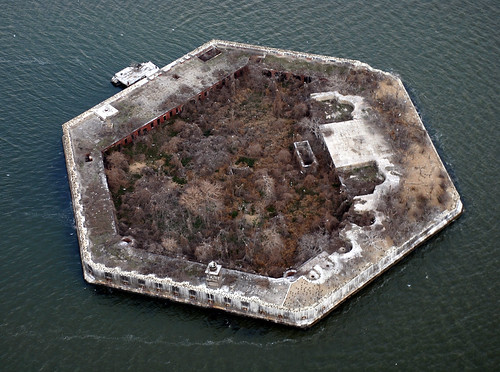
Fort Carroll
 |
| Photo: Gene Carl Feldman |
Built in 1848 under the oversight of Robert E. Lee before he became a Confederate general, the site has long been abandoned and is now essentially a bird sanctuary.
While I had hoped to cross the busy Chesapeake Bay shipping lanes on canoe or kayak to reach the rotting relic of concrete, iron and wood, time just did not allow it.
Maybe next time. I wonder if Four Square has a Fort Carroll mayor?
 |
| Photo: Avi8tor4fun Flickr page |
Wednesday, December 01, 2010
Lexington Market
Where else will the Utz girl sell you an assault rifle, the dope fiend in a lean sell you Xanax without a prescription, and Faidley's sell you the best crab cake in the world.


Monday, November 29, 2010
Khamenei dying of cancer?
Among the vast number of communiques released by Wikileaks "cablegate," one from August 2009 in Tehran suggesting that supreme Ayatollah Ali Khamenei is dying of leukemia (and would in fact likely only live a few months). The supreme ayatollah has been chronically ill for years, and rumors that he has cancer (often lung cancer) have been published since at least 2006.
The 2009 cable suggests that some Iranian political players may be cautious to act too boldly until Khamenei passes and the reform leader Rafsanjani might be able to position himself to be appointed the next ayatollah by the Assembly of Experts.
This same cable also mentions a general "invisible strike," where Iranian workers have been showing up but not working as a form of nonviolent resistance in the aftermath of the fraudulent elections and political violence.
The 2009 cable suggests that some Iranian political players may be cautious to act too boldly until Khamenei passes and the reform leader Rafsanjani might be able to position himself to be appointed the next ayatollah by the Assembly of Experts.
This same cable also mentions a general "invisible strike," where Iranian workers have been showing up but not working as a form of nonviolent resistance in the aftermath of the fraudulent elections and political violence.
Wikileaks Diplomatic Cables
DIY researchers and journalists are bouncing off the walls tonight, as Wikileaks has released hundreds of thousands of diplomatic cables from US embassies around the world. About half are classified in some way. Among the bombshells already described by NYTimes:
The cables are now published on line in full (with some redactions and deletions austensibly to protect the release of identities and some other sensitive information. However, access is inconsistent reportedly because of a "cyberattack."When Afghanistan’s vice president visited the United Arab Emirates last year, local authorities working with the Drug Enforcement Administration discovered that he was carrying $52 million in cash. With wry understatement, a cable from the American Embassy in Kabul called the money “a significant amount” that the official, Ahmed Zia Massoud, “was ultimately allowed to keep without revealing the money’s origin or destination.”
Monday, November 22, 2010


Subscribe to:
Posts
(
Atom
)